What an innovation project unexpectedly taught me about transformation.
“Sometimes a project answers the question you asked. Sometimes it quietly reveals that you should have been asking a different one.”
Over the past twenty-five years, I have worked with destinations, hotels and tourism organisations on their journey towards sustainability. Like many others in this field, I have believed that meaningful change depends on developing better methods, better tools and better ways of measuring progress. If we could make sustainability more practical, transparent and economically convincing, organisations would naturally become more willing to embrace it.
Looking back, this assumption was well founded. Over the past three decades, sustainability has evolved from a niche concern into an established management discipline. We have developed certification systems, reporting standards, carbon accounting methodologies, ESG frameworks and increasingly sophisticated approaches for measuring environmental and social performance. In many respects, this has been a remarkable success and I was indeed happy with this development. Today, organisations have access to more knowledge, more tools and better frameworks than ever before.
At the same time, the context in which organisations operate has fundamentally changed. Economic uncertainty, geopolitical tensions, labour shortages, technological disruption and growing regulatory demands have created a level of complexity that many organisations have never experienced before. And now another regulatory wave is approaching. The new Empowering Consumers Directive (EmpCo) is intended to reduce greenwashing by tightening the rules for environmental claims. While this is an important step, it also illustrates our recurring tendency to respond to sustainability challenges primarily through ever more regulation.
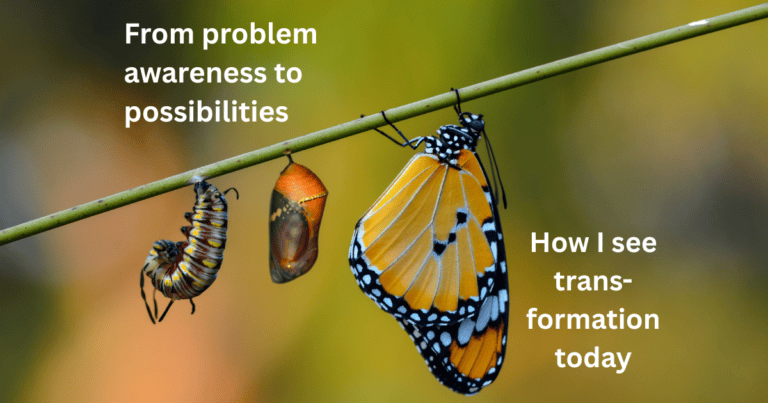
This led us to a different question. The challenge is no longer simply how organisations become more sustainable or comply with the next set of requirements. Increasingly, the real question is what enables organisations to continuously adapt, learn and transform in an increasingly complex and unpredictable world.
I did not arrive at this question through theory. It emerged unexpectedly during an innovation project that, in many respects, achieved exactly what it had set out to do—yet revealed something far more important than its original objective.
Together with Christian Hiß and Hans Jaich, owner of the the im-jaich Hotel Bremerhaven, we explored whether Regional Value Accounting—an approach originally developed by Christian Hiß for agriculture—could be adapted for tourism. The idea was simple: to make visible the positive ecological, social and regional value that hotels create, but that conventional accounting rarely captures.
For tourism, this perspective seemed particularly relevant. Hotels depend on much more than their own operations. Their success is closely linked to healthy landscapes, vibrant communities, committed employees and resilient regional supply chains. If these relationships create value, perhaps they should also become part of how we understand business performance.
After fourteen months of development, we had adapted a first draft of the methodology for the hospitality sector. From a research perspective, the project had largely achieved its objective.
Then came the pilot.
We invited regional suppliers who already maintained close relationships with the participating hotel to take part in testing the methodology. We even offered financial compensation to recognise the additional effort involved.
Every supplier we approached declined to participate. At first, I regarded this as the disappointing part of the project. Looking back, I now believe it was indeed a very valuable outcome.
When we spoke with the suppliers about their decision, we expected to encounter scepticism towards sustainability or doubts about the proposed methodology.
Instead, we realised that their scepticism had a different source. It was not the value of the project they questioned, but their ability to engage with it under the circumstances they were facing. Having already invested considerable effort in becoming more sustainable while coping with labour shortages, increasing regulation, economic uncertainty and the day-to-day realities of running their businesses, they could not commit to the additional complexity the pilot required.
Only then did we realise that the real obstacle was not the project itself, but the limited capacity to take on its additional complexity.
Without intending to do so, our project had shifted its focus. We were no longer exploring whether Regional Value Accounting could be transferred to tourism. We had begun asking a much more fundamental question:
What enables organisations to keep transforming in an increasingly complex world?
Reflecting on this experience, we began to wonder whether it pointed to something larger than our project.
Perhaps we are now entering a different phase.
Today, the challenge may no longer be primarily about awareness or methodology. Increasingly, it seems to be about the conditions that enable organisations to continue transforming in an increasingly complex world.
How do organisations continue transforming while simultaneously responding to labour shortages, economic uncertainty, geopolitical tensions, technological disruption and growing regulatory demands? How do they find the time, attention and organisational capacity to engage with new initiatives when existing transformation processes already compete for the same limited resources?
I don’t yet know whether our experience reflects a broader shift. But I increasingly encounter similar patterns across tourism and hospitality. Organisations are not turning away from sustainability. Some have already made remarkable progress. The question is whether they still have the capacity to take the next step including the question how sustainability can be an integral part of any tourism operation.
Perhaps this is where sustainability meets its new bottleneck.
This experience also changed the way I think about regeneration.
For several years, I have understood regeneration not simply as the next step beyond sustainability, but as a way of thinking about transformation inspired by living systems. I still believe that perspective has much to offer.
The project, however, gave it a new dimension.
If the real bottleneck is no longer a lack of knowledge or methods, but the capacity of organisations to continue transforming, then regeneration may also help us understand how that capacity can be strengthened.
I found myself looking differently at leadership, trust, collaboration, organisational culture and community relationships. I no longer see them simply as supporting elements of transformation. Increasingly, they seem to be part of the conditions that make transformation possible in the first place.
I am still exploring this idea.
Perhaps regeneration can help us understand how people, organisations and places remain capable of transformation in an increasingly complex world.
Looking back, our project answered the question we originally set out to investigate. We showed that Regional Value Accounting can be adapted to the hospitality sector.
Yet this is no longer what I consider its most important contribution.
It revealed a different question.
What if the greatest challenge facing sustainability today is no longer developing better methods, but strengthening the capacity of organisations to keep transforming in an increasingly complex world?
I don’t yet know whether this observation reflects a broader shift or simply the reality many organisations are facing today.
What I do know is that it has changed the way I think about regeneration.
Perhaps this is one of the reasons why regeneration has become increasingly important in my own work. It shifts my attention from developing better methods to understanding what enables organisations to keep transforming.

Andreas Koch, a leading expert in sustainable and regenerative tourism, has dedicated over 25 years to integrating sustainability as a model for success. As Sustainability and Quality Manager at TUI Germany, as well as the founder of bluecontec/tourythm GmbH and Futouris e.V., he has supported numerous destinations and hotels. Koch views sustainability as a fundamental mindset and advocates for collaborative, interconnected approaches to build a future-ready industry.